
Ingredients and uses
Cardamom: nutrition and Saudi coffee
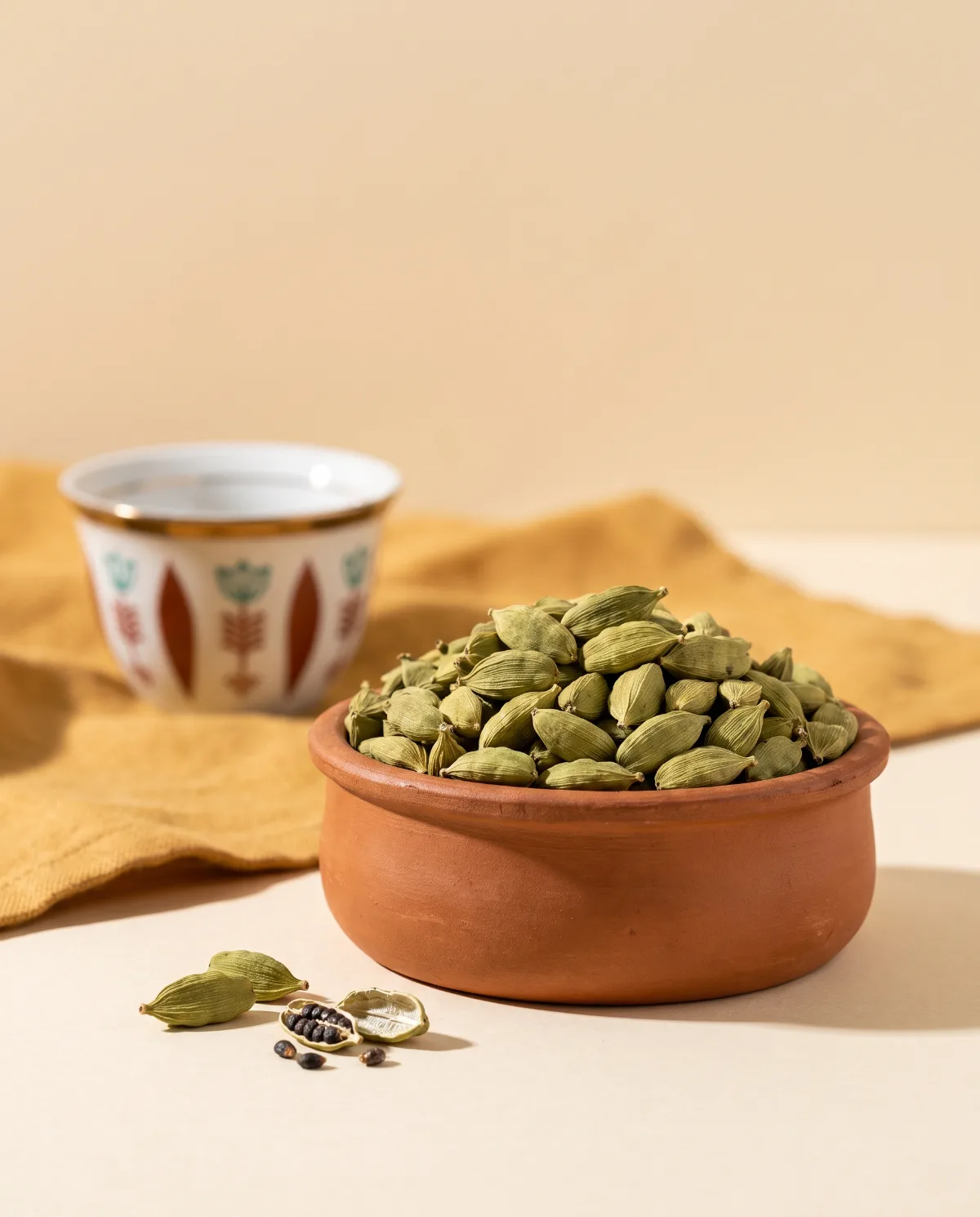
Cardamom is the soul of Saudi coffee, and its aroma also goes into tea, desserts and kabsa. You can buy it as whole pods (closed or open) or ground. This page covers its nutrition values from an official source, how to use it, and how to make Saudi coffee with cardamom.
Cardamom nutrition facts
Values per 100 g, from the U.S. Department of Agriculture database (USDA FoodData Central). Cardamom is used in small amounts, so the values per 100 g are for comparison only.
| Nutrient | Cardamom |
|---|---|
| Energy | 311 kcal |
| Protein | 10.8 g |
| Fat | 6.7 g |
| Carbohydrates | 68.5 g |
| Fiber | 28 g |
| Calcium | 383 mg |
| Iron | 14 mg |
| Magnesium | 229 mg |
| Potassium | 1120 mg |
| Zinc | 7.5 mg |
| Sodium | 18 mg |
How to use cardamom
- Saudi coffee: ground cardamom is its key ingredient.
- Tea: a couple of pods give tea a lovely aroma.
- Cooking and desserts: in kabsa and mandi, and in luqaimat and maamoul.
Easy cardamom recipes
Saudi coffee with cardamom
Ingredients: 1 litre water, 3 tablespoons light-roast ground Arabic coffee, 1 tablespoon ground cardamom, and a pinch of saffron or cloves if you like.
- Boil the water in the dallah (coffee pot).
- Add the coffee and simmer on low heat for about 10 minutes.
- Add the cardamom and saffron and keep on the heat for 2 to 3 minutes.
- Let it rest so the grounds settle, then pour into a flask.
Cardamom tea
Ingredients: 2 cups water, 2 teaspoons tea, 3 crushed cardamom pods, sugar to taste.
- Boil the water with the cardamom for 3 minutes.
- Add the tea, turn off the heat and cover for 3 minutes.
- Strain and serve.
Storage
- Keep in an airtight container away from heat, moisture and sunlight.
- Whole seeds keep their aroma longer than ground, so grind only what you need.
Sources
- USDA FoodData Central — Spices, cardamom (FDC 170919)
This information is for general knowledge and does not replace advice from a doctor or dietitian.