
Ingredients and uses
Cumin: nutrition and uses
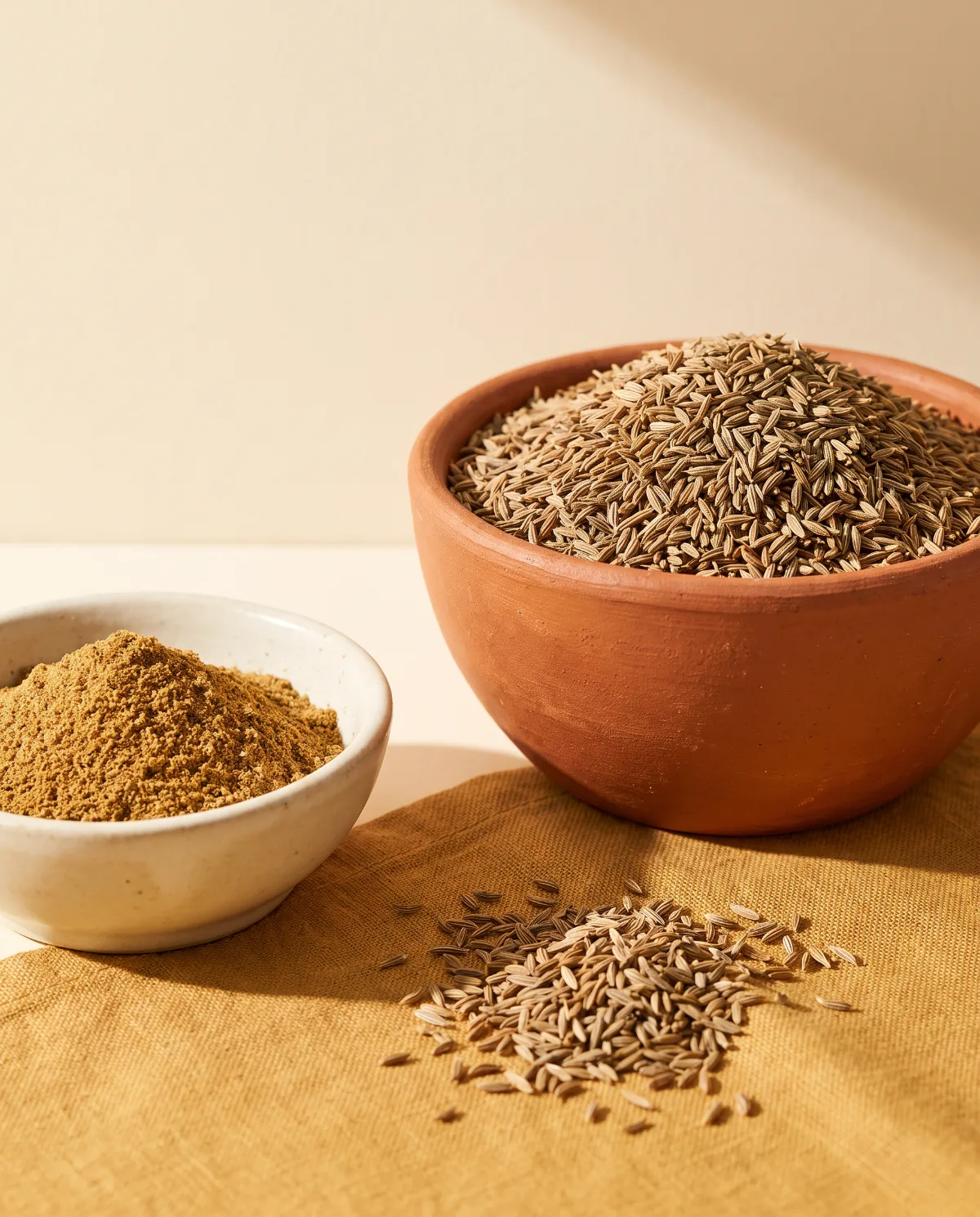
Cumin is one of the most used spices in Saudi cooking, in ful, balila, kabsa and soups. You can buy it as whole seeds or ground. This page covers its nutrition values from an official source, how to use it, and how to toast and grind it at home.
Cumin nutrition facts
Values per 100 g, from the U.S. Department of Agriculture database (USDA FoodData Central). Cumin is used in small amounts, so the values per 100 g are for comparison only.
| Nutrient | Cumin seed |
|---|---|
| Energy | 375 kcal |
| Protein | 17.8 g |
| Fat | 22.3 g |
| Carbohydrates | 44.2 g |
| Fiber | 10.5 g |
| Calcium | 931 mg |
| Iron | 66.4 mg |
| Magnesium | 366 mg |
| Potassium | 1790 mg |
| Zinc | 4.8 mg |
| Sodium | 168 mg |
How to use cumin
- Ful and balila: a pinch of ground cumin is essential.
- Kabsa and soups: together with other spices.
- Marinades: for chicken, meat and fish.
Toasting and grinding cumin at home
Toasted ground cumin
Ingredients: ½ cup cumin seeds.
- Put the seeds in a dry pan over medium heat.
- Stir for 2 to 3 minutes until fragrant, without letting them burn.
- Let them cool completely, then grind in a spice grinder.
- Store in an airtight container.
Storage
- Keep in an airtight container away from heat, moisture and sunlight.
- Whole seeds keep their aroma longer than ground, so grind only what you need.
Sources
- USDA FoodData Central — Spices, cumin seed (FDC 170923)
This information is for general knowledge and does not replace advice from a doctor or dietitian.