
Ingredients and uses
Walnuts: nutrition and recipes
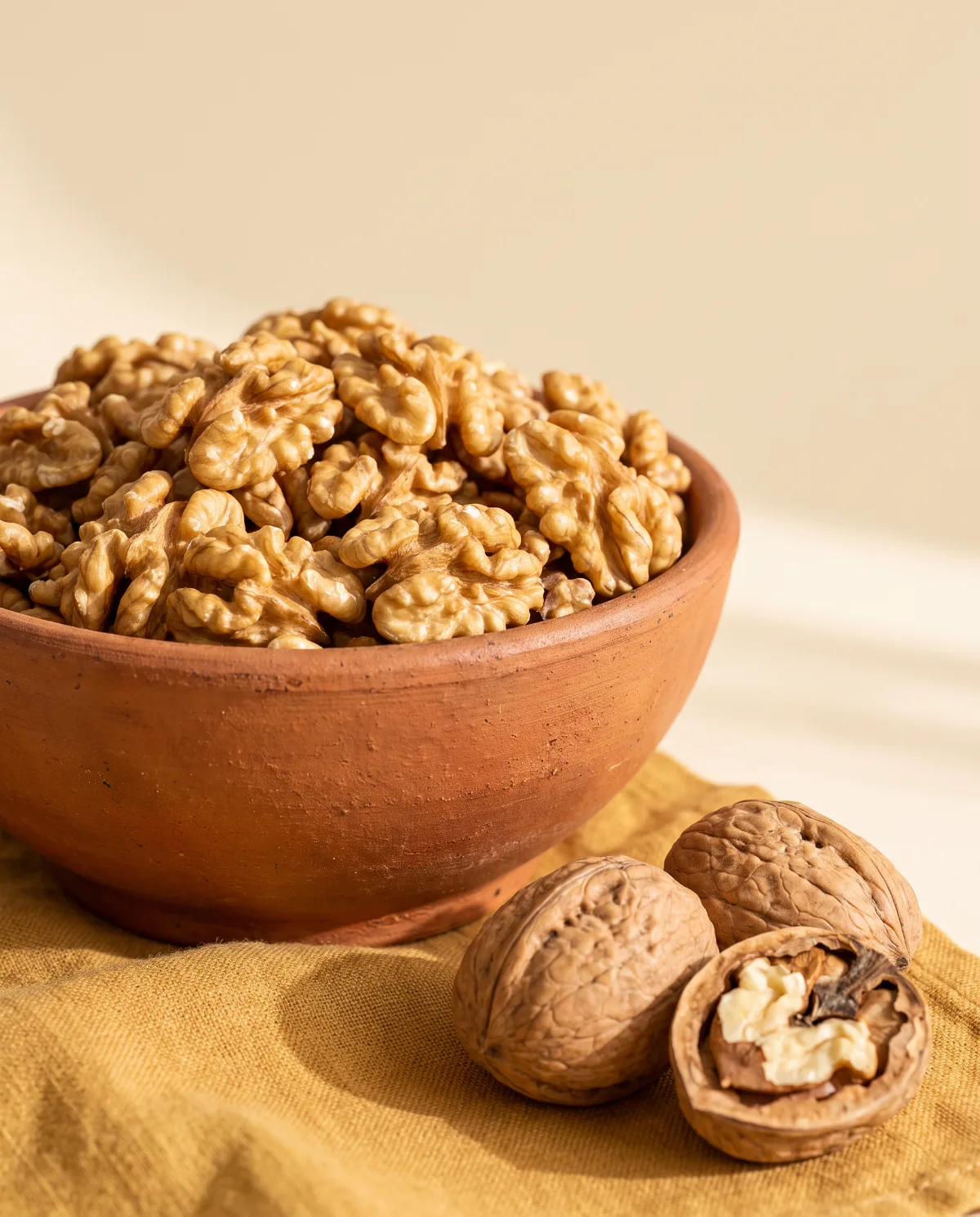
Walnuts are an important nut for desserts, pastries and salads. You can buy them in the shell, or shelled as halves and pieces. This page covers their nutrition values from an official source, how to use them, and two easy recipes.
Walnut nutrition facts
Values per 100 g, from the U.S. Department of Agriculture database (USDA FoodData Central).
| Nutrient | Raw |
|---|---|
| Energy | 654 kcal |
| Protein | 15.2 g |
| Fat | 65.2 g |
| Carbohydrates | 13.7 g |
| Fiber | 6.7 g |
| Calcium | 98 mg |
| Iron | 2.9 mg |
| Magnesium | 158 mg |
| Potassium | 441 mg |
| Zinc | 3.1 mg |
| Sodium | 2 mg |
Health note
According to the UK National Health Service (NHS), tree nuts such as cashews, pistachios, almonds and walnuts are among the most common food allergens. If you are allergic to any nut, talk to your doctor before eating them.
How to use walnuts
- In desserts: in maamoul, brownies and cakes.
- In salads: with leafy greens and pomegranate.
- In cooking: in muhammara and sauces.
Easy walnut recipes
Muhammara
Ingredients: 1 cup walnuts, 2 roasted red peppers, ¼ cup breadcrumbs, 2 tablespoons pomegranate molasses, ¼ cup olive oil, cumin, salt, and chili to taste.
- Put everything in a blender.
- Blend until slightly coarse, not completely smooth.
- Taste, adjust the salt and chili, and serve with bread.
Walnut salad
Ingredients: Lettuce or rocket, ½ cup walnuts, pomegranate seeds, olive oil, lemon, salt.
- Toast the walnuts in a dry pan for 3 minutes.
- Mix the greens with the pomegranate and walnuts.
- Add the oil, lemon and salt, and serve right away.
Storage
- Keep in an airtight container in a cool, dry place away from sunlight.
- For longer storage, the fridge keeps the flavour fresher.
Sources
- USDA FoodData Central — Nuts, walnuts, english (FDC 170187)
- NHS — Food allergy
This information is for general knowledge and does not replace advice from a doctor or dietitian.