
Ingredients and uses
Basmati rice: nutrition and how to cook it
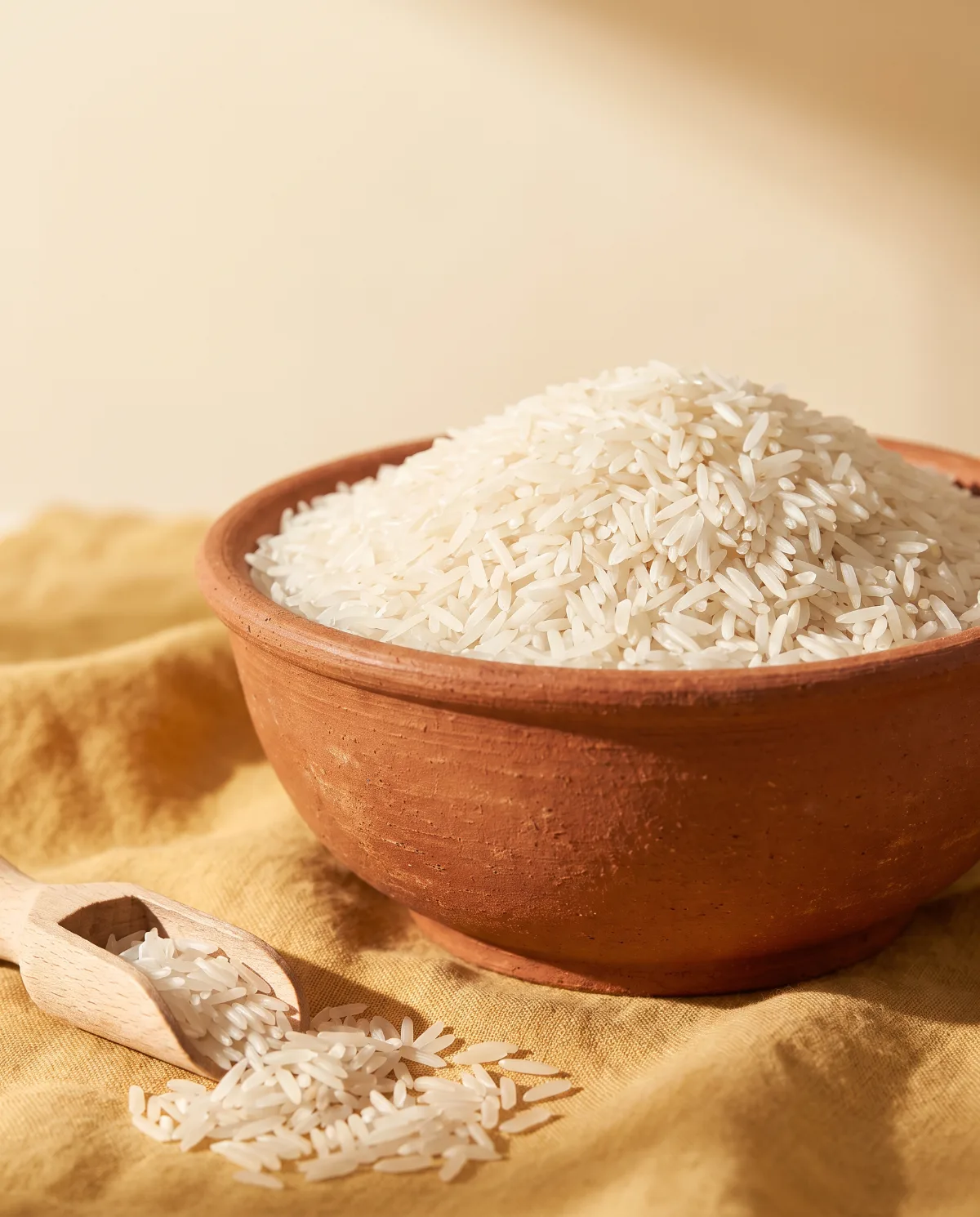
Rice is at the heart of the Saudi table, from kabsa to mandi and biryani. Basmati has long grains and a special aroma, and there are other types such as American, Egyptian and brown rice. This page covers the nutrition values of long-grain white rice from an official source, and how to cook basmati the right way.
Long-grain white rice nutrition facts
Values per 100 g, from the U.S. Department of Agriculture database (USDA FoodData Central). Values are for long-grain white rice in general. Cooked rice absorbs water, so its values are lower than uncooked rice.
| Nutrient | Uncooked | Cooked |
|---|---|---|
| Energy | 365 kcal | 130 kcal |
| Protein | 7.1 g | 2.7 g |
| Fat | 0.7 g | 0.3 g |
| Carbohydrates | 80 g | 28.2 g |
| Fiber | 1.3 g | 0.4 g |
| Calcium | 28 mg | 10 mg |
| Iron | 0.8 mg | 0.2 mg |
| Magnesium | 25 mg | 12 mg |
| Potassium | 115 mg | 35 mg |
| Zinc | 1.1 mg | 0.5 mg |
| Sodium | 5 mg | 1 mg |
Rice types and uses
- Basmati: for kabsa, mandi and biryani.
- Egyptian rice: short grain, good for stuffed vegetables and rice pudding.
- American rice: long, firm grain for everyday dishes.
- Brown rice: with its bran layer, takes longer to cook.
How to cook basmati rice
Fluffy basmati rice
Ingredients: 2 cups basmati rice, 3 cups water, 1 tablespoon oil or ghee, salt.
- Rinse the rice in cold water several times until the water runs clear.
- Soak for 30 minutes, then drain.
- Boil the water with the salt and oil, then add the rice.
- When the water on top is absorbed, cover, turn the heat to the lowest setting and leave for 15 minutes.
- Turn off the heat, keep covered for 5 minutes, then fluff with a fork.
Storage
- Keep in an airtight container or sealed bag in a cool, dry place.
- Refrigerate cooked rice soon after it cools and use within one or two days.
Sources
- USDA FoodData Central — Rice, white, long-grain, regular, raw, unenriched (FDC 169756)
- USDA FoodData Central — Rice, white, long-grain, regular, unenriched, cooked without salt (FDC 169757)
This information is for general knowledge and does not replace advice from a doctor or dietitian.