
Ingredients and uses
Lupini beans: nutrition and recipes
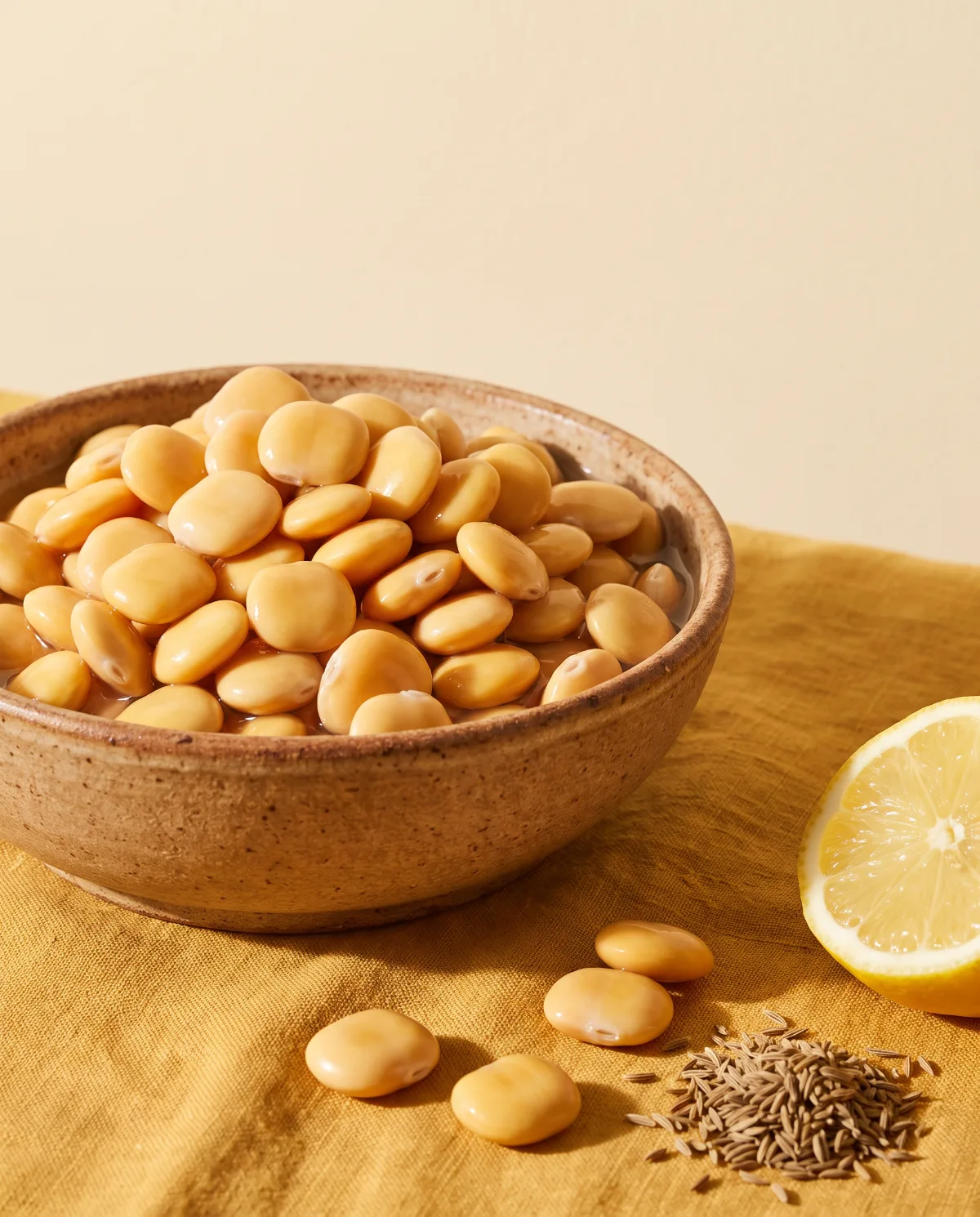
Lupini beans (lupins) are a well-known legume across Saudi Arabia and the Gulf. You can buy them dry for cooking, ready to eat in brine, or ground into flour. This page covers their nutrition values from an official source, key safety tips, and two easy recipes.
Lupin nutrition facts
Values per 100 g, from the U.S. Department of Agriculture database (USDA FoodData Central). Boiled lupins absorb a lot of water, so their values are lower than dry seeds.
| Nutrient | Dry lupins | Boiled, no salt |
|---|---|---|
| Energy | 371 kcal | 119 kcal |
| Protein | 36.2 g | 15.6 g |
| Fat | 9.7 g | 2.9 g |
| Carbohydrates | 40.4 g | 9.9 g |
| Fiber | 18.9 g | 2.8 g |
| Calcium | 176 mg | 51 mg |
| Iron | 4.4 mg | 1.2 mg |
| Magnesium | 198 mg | 54 mg |
| Potassium | 1010 mg | 245 mg |
| Zinc | 4.8 mg | 1.4 mg |
| Sodium | 15 mg | 4 mg |
Lupins boiled with salt contain about 240 mg of sodium per 100 g. Ready-to-eat brined lupins can be higher, depending on the salt used.
Bitter lupins must be debittered first
Dry lupin seeds taste bitter because of natural compounds called alkaloids. According to the German Federal Institute for Risk Assessment (BfR), a bitter taste can mean these alkaloids are still present. In larger amounts they can cause poisoning that affects the nervous, circulatory and digestive systems.
Safety tips
- If you have no experience debittering lupins, buy them ready-debittered, or choose sweet lupins.
- Never drink the soaking water of bitter lupins or use it for cooking.
- If the lupins still taste bitter, do not eat them.
Allergy note
Lupin can cause allergic reactions in some people, and it is one of the allergens that must be labelled in the European Union. The Australasian Society of Clinical Immunology and Allergy (ASCIA) and Food Standards Australia New Zealand (FSANZ) note that some people with peanut allergy may also react to lupin. If you are allergic to peanuts, talk to your doctor before trying it.
How to use lupins
- As a snack: brined and salted, with lemon and cumin or chili.
- In salads: they add a light, firm bite.
- Ground lupin: mixed with flour in baked goods, and used by food manufacturers in bread and pasta.
Easy lupin recipes
Lupins with lemon and cumin
Ingredients: 2 cups ready-to-eat lupins, juice of 1 lemon, ½ teaspoon cumin, chili to taste.
- Drain the lupins from the brine.
- Add the lemon juice, cumin and chili, and mix well.
- Chill for 15 minutes and serve cold.
Lupin salad
Ingredients: 1 cup peeled ready-to-eat lupins, 1 cucumber and 1 tomato (diced), spring onion, parsley, 1 tablespoon olive oil, lemon juice.
- Peel the lupins: press each bean between your fingers and it slips out of its skin.
- Mix with the vegetables and parsley.
- Add the olive oil and lemon juice, toss, and serve right away.
Sources
- USDA FoodData Central — Lupins, mature seeds, raw (FDC 172423)
- USDA FoodData Central — Lupins, mature seeds, cooked, boiled, without salt (FDC 172424)
- USDA FoodData Central — Lupins, cooked, boiled, with salt (FDC 173804)
- BfR — Lupin seeds: Health impairments possible with bitter taste
- ASCIA — Lupin food allergy
- FSANZ — P1026: Lupin as an allergen
- EU — Regulation (EU) No 1169/2011, Annex II
This information is for general knowledge and does not replace advice from a doctor or dietitian.